It’s the most wonderful time of year! The time when I confront the fact that having a child has severely impacted on my cinema-going.
I’ve had a grand total of 3 cinema trips in 2025. One was a post-Oscars return to the big screen for Anora, another was a Cambridge Film Festival late-night screening of what’s set to rake in the awards in 2026, Hamnet, and the third film happens to boast one of my favourite film scores of the year – although considering the symbiotic relationship between a film and its score, this is not really that surprising.
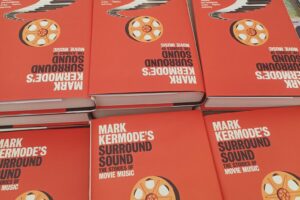
Therefore, to be clear, the list below are my highlights as primarily stand-alone listens, so for the majority of them, I cannot confirm whether or how they enhance the film itself. But, as Mark Kermode and I discussed at many of our book events across the Summer and Autumn, to me, the strongest and most successful film scores are the ones that can thrive independently of the film but equally you can’t imagine the film without them.
So, in no particular order, here are some of my favourite film score releases from 2025. Most are unlikely to trouble the big award nominations lists but they’re well worth seeking out, especially if you’re keen to expand your awareness of women screen composers:
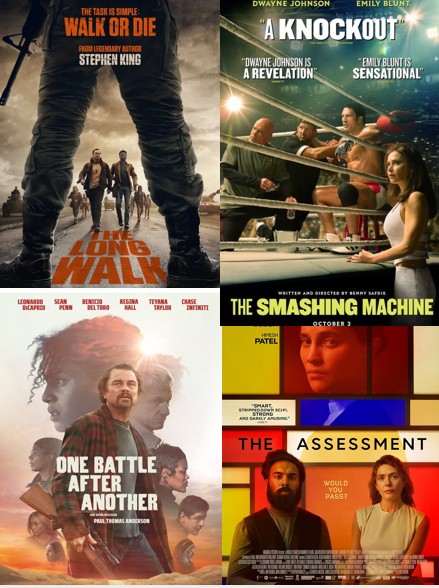
The Assessment by Emilie Levienaise-Farrouch – Levienaise-Farrouch is such a sophisticated screen composer who creates entirely unique sound worlds for each of her film scores. The opening track ‘Mother’ is an exceptional scene-setter, using choppy breaths to great effect, combined with ethereal vocals and heartwarming strings.
22 Bahnen by Dascha Dauenhauer – It must be an interesting – and no doubt daunting – task for a composer when scoring a film about (amongst other things) swimming. How to capture the sensory nature of leaping into water – the freedom, comfort, strength and danger? Dauenhauer has created a predominantly electronic score which is both dreamy and euphoric. The title track is simple and mesmeric and there’s a moving choral-led cue called ‘Mama’ but then there are also bangers in the Euro trance-y ‘Love Won’t Drift Away’ and techno-leaning ‘Three’.
The Long Walk by Jeremiah Fraites – I don’t know much about The Lumineers but Fraites has clearly honed his capacities for creating catchy, emotion-laden numbers. This is the drummer and multi-instrumentalist’s first film score. ‘Miles’ is a simple repeated piano refrain with a big woozy background that soars to something Cinematic with a capital ‘C’ and ‘Olson’ is a heartstring-tugging pop track of fuzzy electronica. ‘Spoon’ starts with insistent strings that gradually become more mournful in tone – and it’s his confident use of light and shade along with more tuneful, hummable moments that make this such a compelling listen.
Lilies Not for Me by Theodosia Roussos – I first came across Roussos with her brilliant score to the 2023 documentary Being Mary Tyler Moore. She’s an intriguing multi-hyphenate talent: a composer, soprano, oboist and English Horn player who seems as comfortable and confident working on original opera art films as she is co-scoring documentaries with Devonté Hynes. There’s a lot to enjoy in her music for this period drama, and my highlights include the harp-driven ‘Passion in the Oak’, the darker and more uncertain ‘Dot’s Turn’ and the exquisite, delicate ‘Ending’, where a soaring vocal duets with triumphant piano.
One Battle After Another by Jonny Greenwood – Greenwood remains one of the most exciting experimental composers operating within movie A-list territory and his creative collaboration with Paul Thomas Anderson continues to fascinate and delight. (I feel duty bound at this point to direct you to Chapter 3 of Mark Kermode’s Surround Sound: The Stories of Movie Music to find out about the inner workings of their partnership). I am assured that the music is an exceptional fit to the film but even as a stand-alone listen there are so many highlights that demonstrate Greenwood is such a class act, from the mischievous piano in ‘The French 75’ which finds more of a groove in ‘Baby Charlene’ to the quite frankly beautiful (with just a hint of swagger) ‘Trust Device’.
Four Letters of Love by Anne Nikitin – A new score by Nikitin is always a treat. If she’s a new name to you, check out her work on American Animals, Calibre and TV show Mrs Wilson. Here she embraces traditional Irish music, in keeping with the film’s setting, which (to my ears) doesn’t veer too far into pastiche or stereotype. Her score is ably enhanced by the superb soprano Grace Davidson whose vocals come to the fore in album opener ‘At Last You See’.
Sinners by Ludwig Goransson – Presumably it’s a two-horse race between this and One Battle After Another for the big awards – but then again, what do I know? One of the things I love about Goransson is that he brings the energy! Thanks to his pop and hip hop production background, he seems to approach scores for the body as well as the ear, and this bluesy, guitar-laden score is filled with teasing invitations to make you move. He wrote most of this score on his 1932 Dobro guitar which comes equipped with a silver resonator that, according to the composer, helps it to ‘sing’ – which was one of his key objectives. The result is evocative, full-bodied and fun. To my ears, it’s one of Goransson’s finest – but does he merit becoming a three-time Oscar winner, when the likes of Greenwood haven’t won any?
Rabbit Trap by Lucrecia Dalt – If the Scala Radio show was still in action, this would surely be one of Mark’s atonal squonkfests of the year. From the creepy atmos and ominous strings in the opener ‘Theme One’ to the far squonkier and unsettling ‘Theme Three’, which boasts hissing, crunching noises under simple, childlike piano, reminiscent to my mind of a sinister nursery rhyme. ‘The Next Wind’ is chugging and persistent, almost jolly – and the overall effect is a strong reminder that the Colombian experimental musician and sound artist is at the peak of her powers when it comes to otherworldly darkness.
And now to a handful of discoveries for me – as in, composers whose work I hadn’t come across before until this year:
The Smashing Machine by Nala Sinephro – This is the debut film score by the London-based Belgian-Caribbean experimental jazz musician and it’s left me hoping she does plenty more. The album is short but leaves a real impression. I love the simple saxophone in ‘Dawn’ which really pulls the listener in, and ‘Grand Prix’ is elegant and expansive, with a touch of restraint. Pop it on loop.
Campamento Garra de Oso (Bear Claw Camp) by Cláudia Correia – The Portuguese composer has gifted us with an energetic romp of a score for this Spanish-language family adventure. Tipping its hat to 1980s-era John Williams, highlights ‘Adventure!’, ‘Something!’ and ‘Go Lola!’ – the exclamation marks in the titles feel justified – all have a twinkle in their eye and the orchestra sounds like it’s having a tonne of fun.
Classe Moyenne (The Party’s Over!) by Clémence Ducreux – According to her biog on her agents website, Ducreux was ‘fascinated at a very young age by the minimalist music of Philip Glass and John Adams’, and this feels evident in stand-out cues ‘Persona non Grata’ and ‘Nota Bene’ with their insistent and spiky piano.
Plainclothes by Emily Wells – I must confess I wasn’t familiar with the multi-instrumentalist, composer, producer and video artist but after listening to her first feature film score I’ll dive into her earlier albums. A film score doesn’t need to be this good! Such a strong stand-alone listen in its own right, full of understated emotion and poppy hooks. Wells’ website describes her as ‘forging a bridge between pop and chamber music’ and this skill comes to the fore here. It’s so confident and creative within the pop-leaning aesthetic and is one of my favourite film scores of 2025 along with…
28 Years Later by Young Fathers – Yes, watching the film in a packed Truro Plaza gave me complete immersion into this score and no doubt cemented its place as one of my top picks of 2025, but I reckon I’d have singled it out even if I hadn’t seen the source material. It sounds like unbottled energy. Young Fathers have created such visceral work for their debut feature score.
Highlights include the propulsive ‘Lowly’ to the heartbreaking, large-scale ‘Remember’, and then there’s ‘Boots’, which features the harrowing 1915 recording of the Rudyard Kipling poem performed by Taylor Holmes, used within the trailer as well as the film. This is one of the most panic-inducing cues I’ve heard in recent years, enhanced by echo effects and dissonant sounds.
It’s no mean feat to cover such a range of extremes, capturing this alternate reality where pure fear and sudden loss are a core part of daily existence, but as with the film, there’s hope within it, if you search hard enough. Yet again I’m reminded that Danny Boyle is one of the foremost directors for fully understanding the role that music plays within film and utilising it to great effect.
I can’t wait to hear what Hildur Guðnadóttir has created for 28 Years Later: The Bone Temple but I have a hunch it will be colder and more angular to reflect the subject matter: I heard screenwriter Alex Garland say in an interview that the 2025 film is about love but the 2026 instalment is about pure evil, and the trailer strongly indicates this too.
So there we are! I’d love to hear about your favourite film score releases of 2025 – and if you’d like to listen to any of the above, here’s a handy Spotify playlist.